
A coat is often the sewing project we dream of… and put off from one winter to the next. Lots of fabric, a lining, highly visible finishes: we’re afraid of ruining beautiful fabric and ending up with a garment we wouldn’t dare wear. So we put it off until next year. What if we looked at it differently? Rather than aiming for a big winter coat right away, start with a jacket. You’ll learn the same techniques, using less fabric, with less risk, and end up with a garment you can wear this fall. Here’s how, step by step.

Why start with a jacket rather than a coat
A coat brings together all the challenges: a lot of fabric, a thick material, often a lining, and long seams where the slightest mistake shows. A jacket lets you work on the same techniques (pockets, button closures, sleeves, finishes) in a shorter, more affordable project that’s quicker to complete. If there’s something you don’t like, you can fix it in the next one, without having invested a coat-sized budget. And once you’ve mastered jackets, moving on to a coat is just a matter of length and fabric.
Step 1: Choose a forgiving first jacket
For your first outerwear piece, choose a relaxed fit and simple lines. A pattern with dropped shoulders and a straight cut is much easier to adjust than a fitted style: no darts to adjust, no set-in sleeves to perfect.
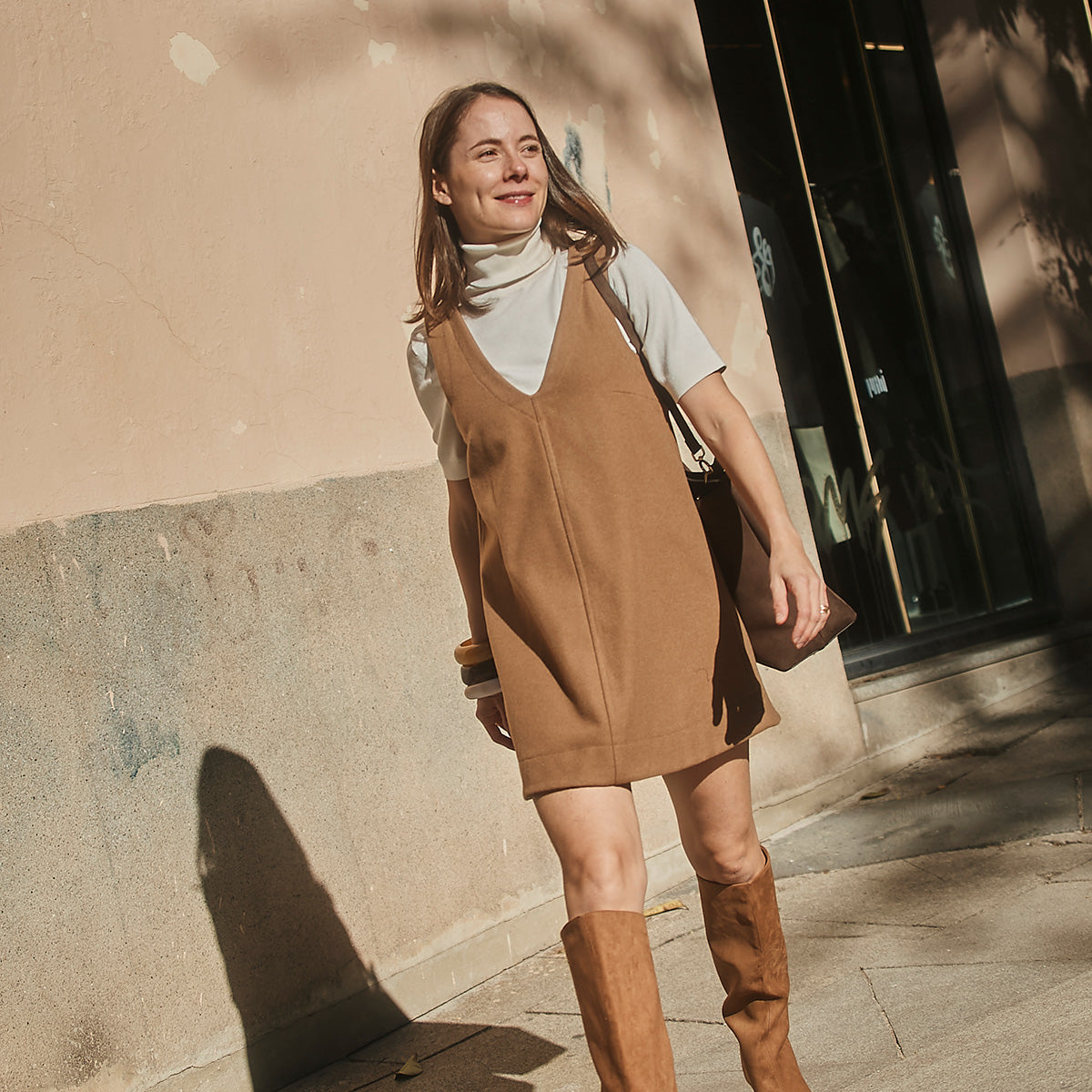
That’s exactly what the pattern [MACAO](https://ikatee.fr/products/pattern-veste-femme-macao-pdf) offers: a women’s jacket or vest with a relaxed fit, in sizes 32 to 52, with a long-sleeve or sleeveless option. It’s described as an easy-to-intermediate pattern and comes with an ikatee video tutorial, which is reassuring when you’re venturing into the unknown. In the photos, it’s buttoned up, with patch pockets at the front: simple details that instantly give it the look of a real outerwear piece.

Step 2: choose the right fabric
The fabric does half the work. For a first jacket, it’s best to choose a stable material that won’t shift under the machine:
- Quilted fabric: it adds warmth and volume while remaining easy to work with. Discover the quilted fabric collection.
- Puffer fabric: lightweight and warm, for a sporty jacket. See puffer fabrics.
- Corduroy: a classic that doesn’t fray and presses well. See corduroy.
- Flannel and wool fabric: for a more polished, cozy look. See flannel and wool fabric
- Sherpa: for a super-soft sleeveless version or to line a collar. See sherpa and faux fur.
Tip: order an extra piece if the fabric has a pattern that needs matching, and prewash it as you intend to care for it later.
Step 3: make a test before cutting into your good fabric
Even for an easy jacket, a quick test can prevent unpleasant surprises. In a bedsheet or an old cotton fabric, simply cut and assemble the shoulders and sides, as you would for a toile. This lets you check that the shoulder width suits you and that the length falls where you want it to. With a loose-fitting pattern like MACAO, it’s quick, and the best way to avoid stress when it’s time to cut your final fabric.


Step 4: the right techniques for neat finishes
A few tips make all the difference when sewing outerwear:
- Interface high-stress areas (front, button placket, collar) with a suitable interfacing to keep the buttonholes from stretching out.
- Match the needle and stitch length to the fabric thickness: a slightly longer stitch and a suitable needle help prevent skipped stitches.
- Press at every step, with the seams open, using a pressing cloth on delicate fabrics.
- Clip the curves (neckline, pocket bottom) so they turn neatly and lie flat.
- Take care with the buttons: choose ones that are large and sturdy enough, and lay them out before sewing to check the alignment. The button collection has everything you need to add a lovely finishing touch.
- Watch the video tutorial for the pattern before you start: seeing the steps in motion is often more helpful than any instructions.

Step 5: Make it your own
Once you've mastered the construction, have fun: contrasting buttons, printed fabric, a sleeveless sherpa version to wear over a chunky sweater, or a quilted jacket for mid-season. The same pattern can create very different pieces depending on the fabric, and that's the charm of sewing: you'll never see the same jacket on the street.
What's next? Move on to the “real” coat with QUIMPER
Once the jacket holds no more secrets for you, you can aim higher: the full-length coat is not so far away. The pattern QUIMPER is a women's parka, in sizes 32 to 52, with three length options (short, mid-length and long). It offers two collar options, a lined hood or a ribbed collar, a zip-front (with optional side zippers), and can be sewn with or without lining. It's an intermediate-level pattern with a video tutorial: the logical next step once you've gained confidence with MACAO.

Over to you
Sewing a coat is not impossible: you just need to avoid learning everything at once. Start with a simple jacket, choose a stable fabric, make a test before cutting, take care with your finishes, and the coat will naturally come next. Find the pattern MACAO and its video tutorial, choose your fabric from our winter collections, and get started. And when you're ready for the next step, QUIMPER is waiting for you.