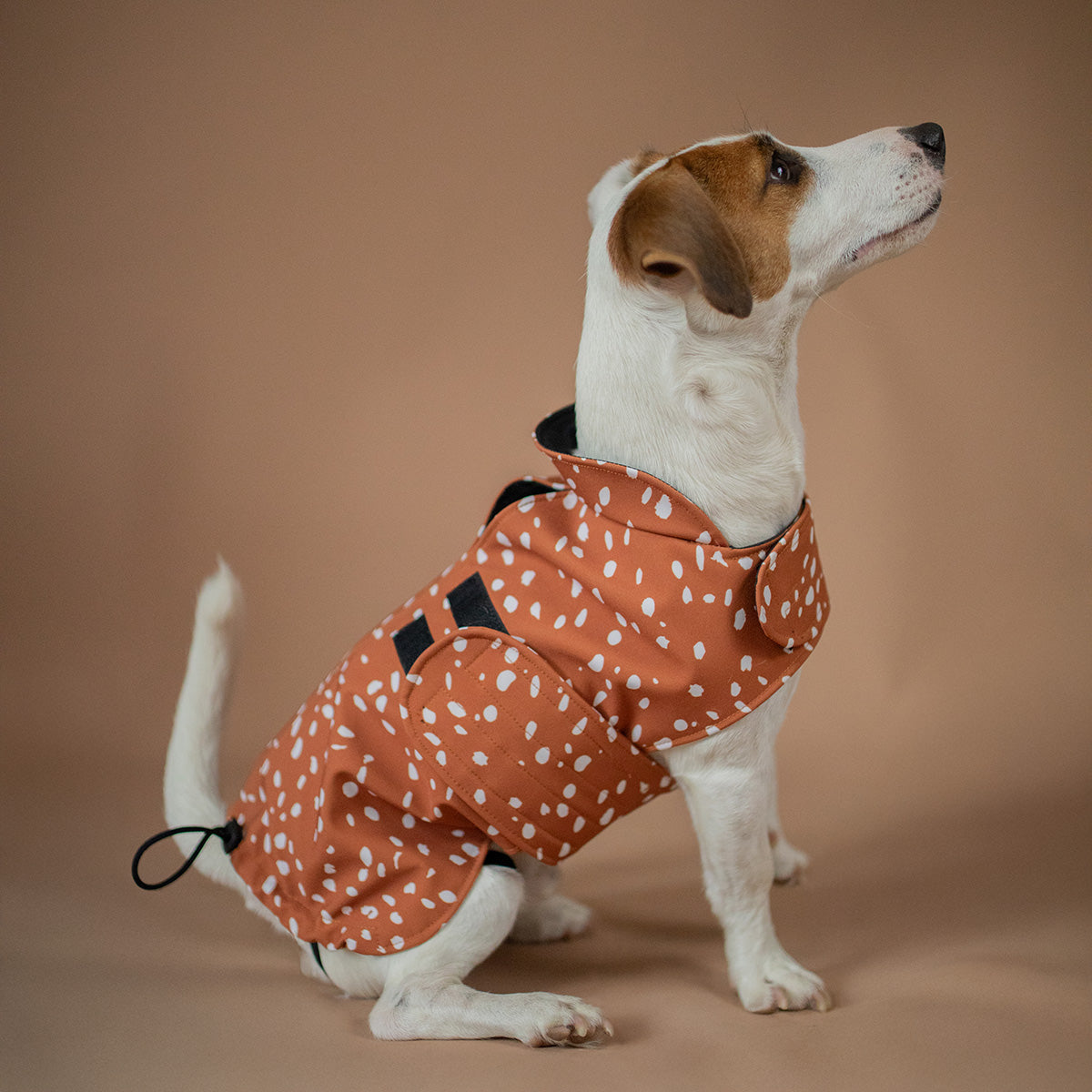
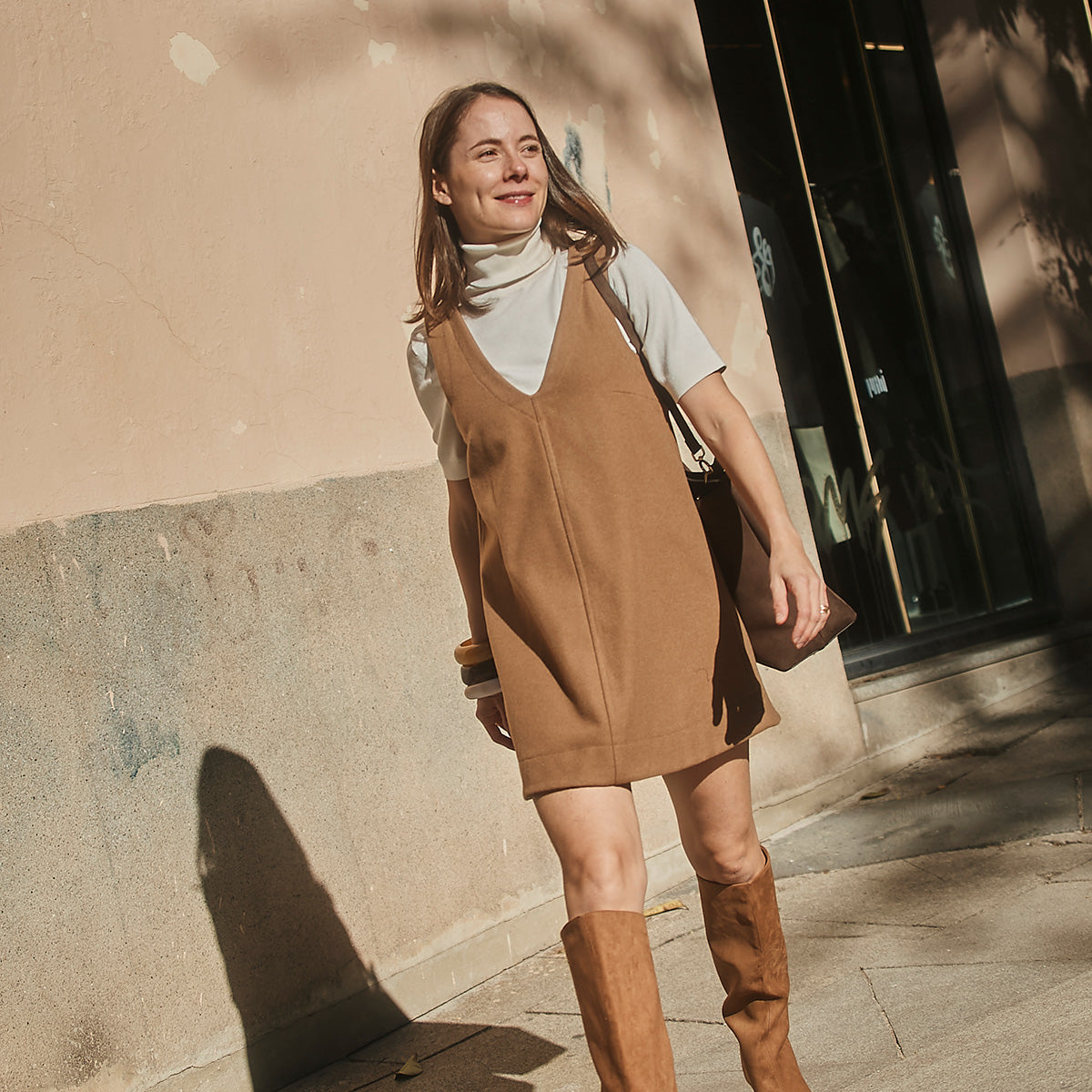

When the first cold days arrive, we want fabrics that keep us warm without weighing us down. Quilted fabric ticks all the boxes: soft and cushioned, with that puffer-like feel that instantly evokes autumn. And the good news is, it’s much easier to sew than it looks, as long as you follow a few key tips. We’ll walk you through them here, along with an ideal project to get started: the RABAT sleeveless gilet.

What exactly is quilted fabric?
Quilted fabric is made by stitching layers of fabric together, with batting adding volume and warmth. Depending on the stitching pattern (checks, chevrons, diamonds, waves), it can have very different looks: more sporty in puffer fabric, more bohemian in quilted double gauze, and more classic in poplin.
At ikatee, you can find it in the quilted fabric collection, sold by the cut starting at 50 cm: quilted poplin, quilted double gauze, quilted cotton with large checks, and even puffer fabric. Plenty of ways to create very different looks with the same pattern.
Choosing the right project: quilted fabric works well with simple shapes
Quilted fabric has volume, so it’s best to choose a pattern with clean lines, few gathers, and few pieces to assemble. A sleeveless gilet, straight-cut jacket, bag, or pouch are perfect projects. On the other hand, avoid very fitted styles or those with lots of pleats, which quickly add bulk.
That’s exactly what the pattern RABAT offers: a sleeveless gilet “somewhere between a gilet and a sleeveless jacket,” in sizes 32 to 52, fully lined. According to the product details, you can choose from two lengths, three necklines (crew neck, V-neck, or high neck), several front closures (edge-to-edge, buttoned, or crossed over), and options such as pockets or a belt. The skill level is listed as easy to intermediate.

Good to know: the RABAT pattern instructions recommend quilted fabric and include a free bonus tutorial explaining how to quilt fabric yourself. Handy if you’d like to create your own fabric using two fabrics and batting.
Our 6 tips for sewing quilted fabric without the stress


1. Choose the right needle. A slightly heavier universal needle or a jeans needle (size 90 to 100) will go through the layers without straining. Change it if you hear the machine “knocking”: a blunt needle can cause skipped stitches.
2. Increase the stitch length. Set it to around 3 mm: longer stitches keep the layers from getting compressed and puckered. Always sew a test swatch in your fabric before you start.
3. Help the fabric feed through. If your machine has a walking foot, now’s the time to use it. Otherwise, slightly reduce the presser foot pressure and guide the fabric without pulling or holding it back.
4. Cut flat, in a single layer. Quilted fabric shifts easily, so it’s better to cut each piece separately rather than with the fabric folded. Remember to match the patterns (checks, chevrons) from one piece to the next for a neat finish.
5. Swap pins for clips. Fine pins get lost in the bulk. Fabric clips hold thick layers more securely.
6. Reduce bulk in the seams. Before sewing the pieces together, you can remove the batting from the seam allowances to avoid bulk. Be careful when ironing: use a moderate temperature, a pressing cloth or simply press with your finger, especially for puffer versions. Always test on a scrap.
Why the lining makes all the difference
With a quilted fabric, the lining is your best ally: it hides seam allowances, makes it easier to put on and gives the inside a neat finish. It’s one of the advantages of RABAT, which is fully lined, and the pattern instructions explain the lining assembly in detail. For a truly comfortable version, choose a lightweight fabric for the inside, such as poplin, chambray or a smooth lining fabric.
For example, the pattern indicates that a long, crossover V-neck vest in size 40 requires about 70 cm of main fabric and the same amount of lining. But fabric requirements vary depending on the length, neckline, and size: refer to the pattern chart. And remember that quilted fabrics are often sold in widths of around 130 to 135 cm, so check the width on the product page before ordering.

Ideas for styling the project
One pattern, several personalities. In printed quilted poplin, RABAT becomes a trendy vest to wear over a shirt. In solid puffer fabric, it takes on a sportier look. In quilted double gauze, it becomes soft and lightweight for chilly days. The options listed in the pattern (belt, pockets, button, snap, or zipper closures) offer even more ways to vary the look.
Want another quilted project? The MACAO jacket can also be sewn in quilted fabric, and the coat, parka, and jacket patterns collection is full of ideas for the season.
A little help from a video
If you prefer watching how it's done rather than reading about it, ikatee video tutorials are just the thing: RABAT comes with a video that explains the construction step by step, including how to adjust it to your height. A great way to get started with confidence.

Get your needles ready!
Quilting is nothing intimidating when you know the right settings. Choose a simple pattern, a suitable needle, a generous stitch length, and let the lining do the rest. Ready to get started? Find the pattern for the RABAT sleeveless vest and the entire quilted fabric collection at ikatee.fr, then share your creations: we can't wait to see them.